Lifestyle Photography for Brands: Why Real Scenes Sell Better

This article was generated with artificial intelligence for Fotografo Videomaker.
Lifestyle photography is the kind of image you scroll past without thinking, then stop on because it feels like something you could own. Instead of a product floating on white, you see a bag on a café table, a jacket over a chair, a candle lit in a half-finished kitchen. For brands, that small shift matters. Real scenes show how a product fits into everyday life, and they tend to hold attention on social channels and product pages. In this guide we look at what makes these images work, where brands usually go wrong and how we plan them on set around Verona.
What Lifestyle Photography Really Means
Lifestyle photography is a style more than a technique. It shows people, objects and places in situations that look spontaneous and lived-in, with the ease and emotion that a studio shot usually leaves out. A photographer working in this style cares less about the sharpest edge of a product and more about the moment just before someone reaches for it.
The difference is easiest to see side by side. A studio picture answers the question of what the thing looks like. A lifestyle picture answers a different one: where would I use this, and who would I be while doing it? For a brand, that second question is often the one that sells.
Lifestyle photography is not the same as candid photography, although the two overlap. A candid shot is taken without staging. Most commercial work is carefully planned: the location is scouted, the props are chosen, the light is timed and the people in frame are briefed so they look relaxed. The result looks effortless because a lot of work happened before the shutter opened.
Why Real Scenes Sell Better Than Studio Backdrops
Think about how you actually browse. A product page with a white background tells you the size and the colour. A scene tells you whether the object belongs in your kitchen, your wardrobe or your office. Brands that want customers to picture themselves with a product need images that let them do exactly that.
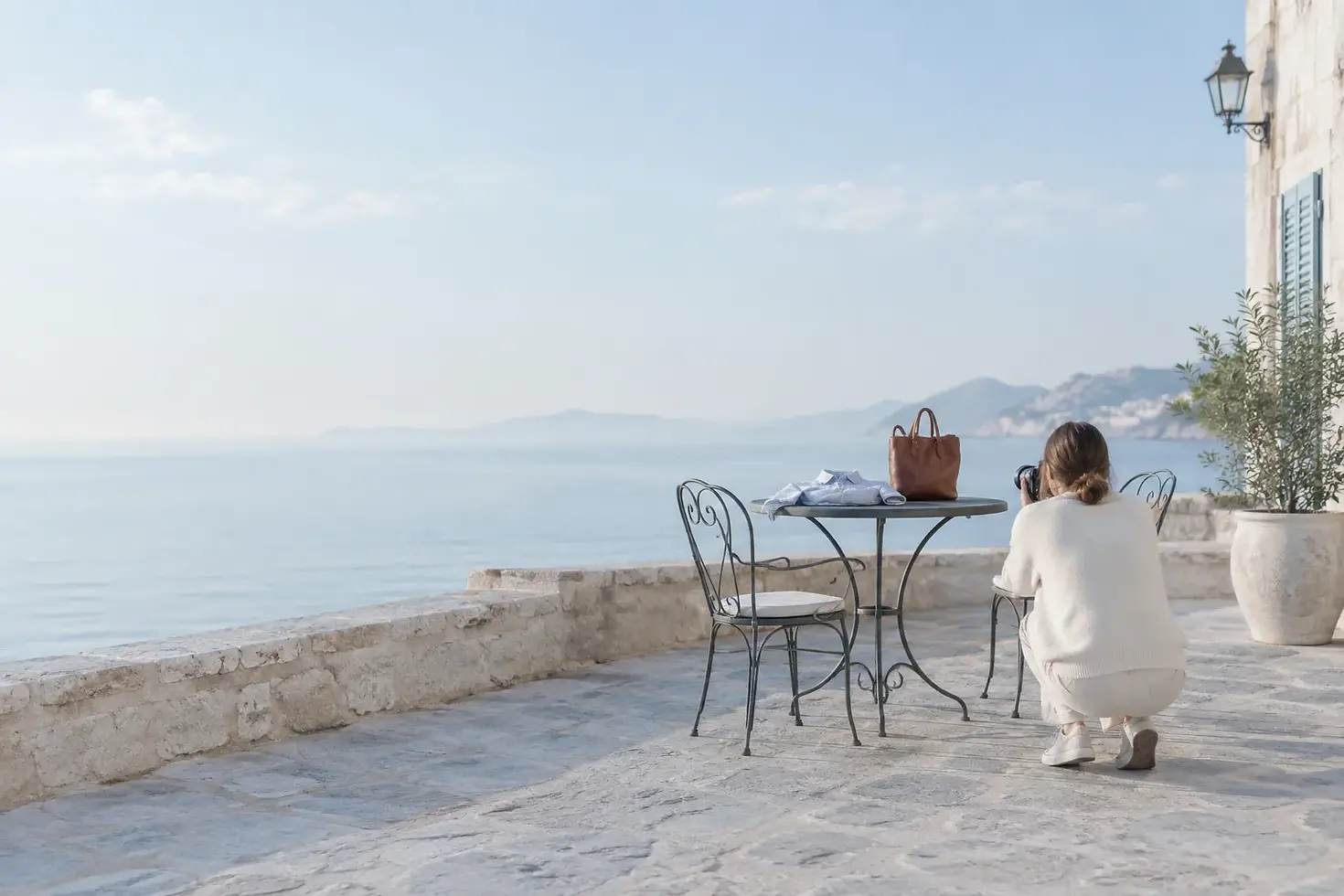
A product shown where a buyer might actually use it.
On social feeds the contrast is even stronger. People scroll quickly, and a setting they recognise is easier to stop for than an object floating in empty space. That does not make studio work obsolete. It means each image has a job, and scenes are usually the ones that create the desire while clean packshots show the detail.
Fashion and accessories make this obvious. A leather tote on a plain backdrop is judged on its finish. The same bag leaning against a café chair, with a folded linen shirt and the edge of a coffee cup in frame, is judged on how it would fit into a morning. Neither approach is wrong, but only the second tends to make a viewer think that could be mine.
On our shoots in the Verona area, the scenes that work best are rarely the most elaborate. A plain wooden table near a window, with one object that looks as if someone just put it down, usually beats a styled set with six props. We have learnt to remove props before we add them.
Lifestyle Product Photography in Practice
Good lifestyle product photography starts long before anyone picks up a camera. The first decision is about the customer, not the product itself. Ask who will buy it, where they will use it and what they are doing just before and after. That answer decides the location, the time of day and the props. A running shoe belongs on a damp pavement at dawn, while a ceramic set belongs on a dining table in afternoon light.
Planning the scene
Next, choose the light on purpose. Soft window light from one side gives texture without harsh shadows, and cool morning light suits calm, clean brands. Warm late light tends to work better for food, leather and anything that should feel inviting. Keeping the same light across a campaign makes the images look coherent when they appear together on a site or in a social feed.
Keeping the product the hero
The most common mistake we see is a scene so busy that the product disappears. Props should support the object, not compete with it. Keep the product in sharp focus, place it where the eye lands first and check the frame at phone size. If you cannot spot the product within a couple of seconds, the scene is doing too much. Shoot a few detail frames as well, such as a stitch, a label or a closure. Buyers often want to see the finish up close, and those frames sit well next to the wider scene on a product page.
Where Brands Go Wrong With Lifestyle Images
Good pictures can create problems that have nothing to do with lighting. Three issues come up again and again, and they are worth settling before the shoot rather than after the campaign is live.
The first is ownership. Under UK law the photographer is normally the first owner of copyright in a commissioned photo, unless the contract says otherwise, and any transfer has to be in writing and signed. If the contract is silent, a court may find only an implied licence to use the images for the purpose they were commissioned. The official guidance on ownership of copyright works explains the details, and it is worth reading before you assume you can reuse the images everywhere.
The second is people. A recognisable person in a photo counts as personal data under UK GDPR, and the ICO's advice on taking photographs covers the practical side. Consent is not always the right legal basis, and it is easy to get this wrong, so speak with a data protection professional before building a paid campaign around identifiable faces.
The third is honesty in the image itself. The ASA enforces the CAP Code for non-broadcast advertising, including websites and social media, and it covers misleading imagery. Retouching and filters are not a problem in themselves, but they can mislead. Before-and-after images are treated as testimonials, so they need signed, dated proof behind them, as the ASA guidance on before and after photos explains. A simple habit helps: keep a note of what was changed in each retouched file. If your ads reach audiences in Italy or elsewhere in the EU, check the local rules with an advertising or legal professional.
Choosing Between a Studio Shot and a Lifestyle Scene
Not every product needs a scene. A studio shot on a clean background is the right tool when a buyer needs to compare colours, check edges or see every detail at once. Marketplaces, spec sheets and zoomed product pages rely on these images, so treat them as the factual record of the object.
The same product, two jobs: a clean packshot and a scene.
A lifestyle scene does a different job. It shows the product in context, suggests how it is used and carries the brand's mood. Most brands end up needing both, and the real question is how to divide the work. A useful rule is that the studio shot answers what exactly this is, while the lifestyle shot answers why I would want it.
When to show people
People make a scene feel real, but they also bring the legal questions described above. Where you can, use hands at work, a figure seen from behind or a reflection in glass. Save clear portraits for cases where the person is part of the story and has agreed in writing to the use. A product in a sunlit kitchen with nobody in frame can still feel completely lived-in.
Lifestyle Shoots for Brands in Verona and Northern Italy
We work from our base in Verona and take product, video and lifestyle projects across the Veneto and the wider north of Italy. Local shoots have a clear advantage: we can scout a café, a boutique, a showroom or a hotel terrace in the same morning and adjust the light on site, rather than rebuilding a set in a studio booked weeks ahead.
If you are planning a campaign, send a short brief covering who the product is for, where it will be used and which channels it needs to fill. We will suggest locations, the light we would use and which detail shots are worth the time. You can browse our services and see past work in the clients section, or get in touch through the contact page to talk through your next shoot.
Frequently asked questions
What is lifestyle photography?
Lifestyle photography shows people, products or places in everyday situations rather than against a plain studio background. The aim is to make a scene feel natural and lived-in, so the viewer can imagine using the product or spending time in the place. It is planned carefully, with chosen locations, props and light, even when the final picture looks spontaneous. Brands use it on websites, social channels and in advertising campaigns.
How is lifestyle product photography different from packshots?
A packshot shows a product clearly on a plain background, usually to display colour, shape and detail. Lifestyle product photography places the same item in a real setting, so buyers can see how it fits into their routine. Most brands need both. Packshots suit marketplaces and spec sheets, while scenes help create desire on social feeds and campaign pages.
Do I need model releases for a lifestyle shoot?
Often yes, especially when a recognisable person appears in the picture and the image is used commercially. Under UK GDPR a recognisable person counts as personal data, and consent is not always the right legal basis, so it is worth getting advice before publishing. A written agreement that states how and where the images will be used is a sensible step. For specific cases, talk to a data protection professional.
Who owns the photos from a commissioned lifestyle shoot?
In the UK the photographer is normally the first owner of copyright in a commissioned photo, unless the contract says otherwise. A transfer has to be in writing and signed. If the contract says nothing, the client may only have an implied licence to use the images for the purpose they were commissioned. Agree on ownership and usage before the shoot, and check the official guidance on GOV.UK.


Comments